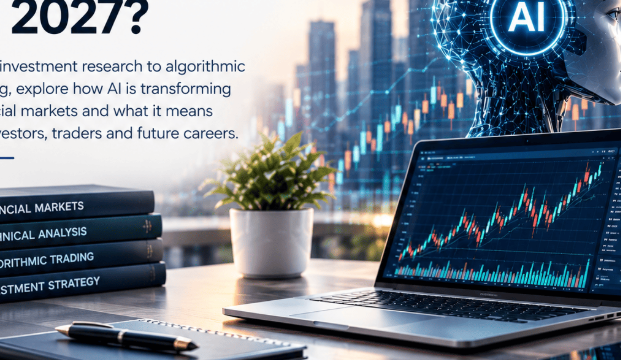
Technology is changing the way people invest, making financial markets more accessible, information easier to find, and investment management more convenient.
In the past, investing often required working with traditional financial institutions, relying on professional brokers, and spending considerable time researching opportunities.
Today, digital platforms, mobile applications, artificial intelligence, and other technological developments are reshaping how individuals approach their financial goals.
These changes have created new opportunities for people who want to understand financial markets and manage their investments. At the same time, technology introduces new responsibilities, including protecting personal information, evaluating online information carefully, and understanding the risks associated with financial decisions.
Whether someone is beginning their investment journey or reviewing an existing portfolio, understanding how technology is transforming investing can help them make more informed decisions.
The Growth of Online Investment Platforms
One of the most noticeable changes in investing is the growth of online investment platforms. These services allow individuals to access investment accounts, review financial information, and manage certain transactions through computers or mobile devices.
Previously, investors often depended on traditional brokers to place orders or obtain account information. Although professional financial services remain important, digital platforms have made many basic investment activities more convenient.
Investors can now review account balances, monitor market movements, examine investment products, and access educational resources from a single application. Some platforms also provide research tools and portfolio summaries that help users understand their financial activities.
This increased accessibility can be particularly useful for beginners who want to learn about investing gradually. However, convenient access does not eliminate financial risk. Before opening an account, investors should understand the platform’s fees, available services, security features, and regulatory status.
Mobile Applications Make Investing More Convenient
Smartphones have become important tools for managing personal finances, and investing is increasingly part of that experience. Mobile investment applications allow users to review their portfolios, receive account notifications, and access market information while away from their computers.
This convenience can help investors stay informed about their financial activities. For example, someone saving toward a long-term goal may use a mobile application to review contributions and track progress over time.
Some applications also provide educational content explaining investment terminology, different asset classes, and basic financial concepts. These resources can help users become more familiar with the investment process.
Nevertheless, frequent access to market information can encourage unnecessary activity. Checking portfolio values constantly or reacting emotionally to short-term price movements may distract investors from their long-term objectives.
Technology is most useful when it supports a thoughtful financial plan rather than encouraging decisions based on every market fluctuation.
Artificial Intelligence and Investment Research
Artificial intelligence is becoming an increasingly visible part of the financial industry. AI-powered tools can process large amounts of information, identify patterns, summarize documents, and help organize financial research.
For individual investors, these capabilities may make certain research activities easier. For example, a digital tool might summarize publicly available company information or explain unfamiliar financial terminology in simpler language.
Financial institutions may also use AI to support risk analysis, customer services, fraud detection, and other operational activities.
However, AI-generated information should not automatically be treated as accurate or complete. These systems can misunderstand information, overlook important details, or produce explanations that sound convincing despite containing errors.
Investors should verify important claims using reliable sources, such as company financial reports, official regulatory documents, and established financial publications.
AI can support the research process, but it does not remove the need for independent judgment. Investment decisions still require consideration of personal circumstances, financial objectives, time horizons, and the possibility of losing money.
Automated Investing and Robo-Advisors
Another technological development is the growth of automated investment services, commonly known as robo-advisors. These platforms use software and financial algorithms to provide certain portfolio management services.
Depending on the provider, users may answer questions about their goals, investment experience, time horizon, and willingness to accept risk. The service may then suggest or manage a portfolio based on its methodology.
Some automated platforms also offer features such as scheduled contributions, portfolio rebalancing, and progress tracking.
Automation can make certain investment tasks more manageable, especially for people who prefer a structured process. It may also reduce the amount of routine account management that users need to perform themselves.
However, automated services are not suitable for every situation. Their investment approaches, fees, available products, and levels of human support can differ considerably.
Before using one, investors should review how the service works, what assumptions it makes, and whether its approach fits their needs. Automated management does not guarantee investment growth or protect a portfolio from market losses.
Greater Access to Financial Education
Technology has expanded access to financial education. Online courses, educational videos, financial calculators, podcasts, and digital publications allow people to explore investing concepts at their own pace.
Beginners can learn about diversification, compound growth, asset allocation, inflation, and the relationship between risk and potential returns without relying exclusively on traditional classroom instruction.
Interactive calculators can also help users explore hypothetical scenarios. For example, someone might estimate how regular contributions could accumulate over time under different assumed rates of return.
These calculations are useful for learning, but their results are illustrations rather than promises. Actual investment performance varies, and fees, taxes, inflation, and changing market conditions can affect outcomes.
Investors should also be careful when evaluating financial content on social media. Popularity does not establish credibility, and some online personalities may have financial interests that are not immediately obvious.
Reliable education encourages readers to understand both potential benefits and possible disadvantages before making decisions.
Blockchain and Digital Investment Infrastructure
Blockchain technology has introduced additional developments in financial services. A blockchain is a type of distributed digital record system that can maintain transaction information across a network.
Certain financial applications use blockchain infrastructure to support digital assets, recordkeeping, and the transfer of value. Some organizations are also exploring tokenization, which involves representing ownership interests or other rights through digital tokens.
These developments may create new ways to manage and transfer certain assets. However, the practical benefits depend on the specific technology, legal arrangements, and financial application involved.
Digital assets can carry substantial risks, including price volatility, cybersecurity threats, limited investor protections, and uncertainty about regulation. Technical complexity can also make it difficult for users to understand what they actually own.
Investors should carefully distinguish between established financial products and newer digital offerings. Understanding the legal rights attached to an investment is essential, regardless of the technology used to record or transfer it.
Improved Data and Portfolio Management
Technology has made it easier to collect and organize financial information. Portfolio management tools can bring together account balances, investment holdings, transaction histories, and performance summaries.
These features may help investors understand how their investments are distributed across different asset classes and identify areas that deserve further attention.
For example, a portfolio dashboard might show whether a person’s investments are concentrated in a particular sector or whether their allocation has changed over time.
Some services also provide alerts when an account reaches a selected threshold or when scheduled contributions are due.
Although these tools can improve visibility, investors should understand how performance figures are calculated. Different platforms may use different reporting methods, and displayed returns may not fully reflect taxes, fees, or other costs.
Regular reviews can help investors stay organized without requiring them to react to every change in market prices.
Cybersecurity and Investor Protection
As investing becomes more digital, cybersecurity has become an important consideration. Online accounts contain sensitive financial information, making them potential targets for fraud, phishing, and unauthorized access.
Investors can reduce certain risks by using strong, unique passwords, enabling multifactor authentication when available, and keeping their devices and applications updated.
They should also be cautious about unexpected messages requesting account credentials, verification codes, or urgent financial transfers. Contacting a financial institution through its official communication channels can help users verify suspicious requests.
Before transferring money to an unfamiliar service, investors should check the provider’s identity, regulatory status, fees, and withdrawal conditions.
Technology can strengthen account security, but no system eliminates every threat. Maintaining good digital habits remains an important part of responsible financial management.
The Future of Technology in Investing
Investment technology will likely continue developing as financial institutions explore new analytical tools, automation, digital infrastructure, and personalized services.
Future platforms may offer more integrated financial dashboards, improved research capabilities, and additional ways to organize long-term savings and investment activities.
These developments could make some financial tasks easier to understand and manage. However, greater technological sophistication will not remove the fundamental principles of investing.
Investors will still need to consider risk, diversification, costs, time horizons, and their own financial circumstances. Technology can provide information and support, but it cannot make uncertain financial outcomes predictable.
Conclusion
Technology is transforming investing by expanding access to financial markets, improving research tools, supporting automation, and making portfolio management more convenient. Online platforms, mobile applications, artificial intelligence, and digital financial infrastructure are changing how individuals interact with investment services.
These developments can help people become more informed and organized, provided they understand the limitations of the tools they use. Careful research, cybersecurity awareness, realistic expectations, and a clear financial plan remain essential.
Ultimately, technology is a resource that can support better financial understanding. By combining digital convenience with patience, critical thinking, and responsible decision-making, investors can use modern tools to manage their financial goals more thoughtfully.