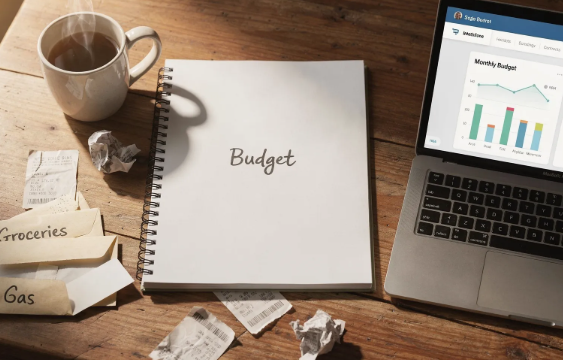
Creating a budget sounds simple in theory.
You write down your income, list your expenses, subtract one from the other, and try to stay within your limits.
Yet many people find that their budgets stop working after a few weeks.
Unexpected expenses appear, spending habits change, or the plan simply feels too restrictive.
The good news is that a successful budget does not have to be complicated. A practical budget should fit your real life, give you room to make choices, and help you understand where your money is going. Instead of treating budgeting as a strict set of rules, think of it as a personal plan for managing your money with greater confidence.
Start With Your Real Income
The first step toward building a useful budget is knowing how much money you actually have available each month. If you receive a regular salary, this may be relatively easy to calculate. If your income changes from month to month because of freelance work, commissions, or other sources, use a conservative estimate based on your typical income.
Focus on the money you can realistically use for your everyday financial responsibilities. Looking at your actual income rather than an optimistic estimate gives your budget a stronger foundation.
If your income varies significantly, consider building your regular spending plan around a lower monthly amount. When you earn more than expected, you can decide how to use the additional money rather than depending on it to cover essential expenses.
Understand Where Your Money Goes
Before deciding how much you should spend in each category, take some time to understand your current spending habits. Review recent bank statements, receipts, bills, and other records.
Separate expenses into broad categories such as housing, transportation, groceries, utilities, communication, entertainment, personal purchases, savings, and debt payments.
This process is not about criticizing yourself for what you have spent. It is simply about getting an accurate picture of your financial habits. Many people discover that small recurring purchases can add up over time, while other expenses are less frequent but much larger.
A budget becomes much easier to maintain when it reflects your actual behavior instead of an idealized version of how you think you should spend.
Separate Needs From Flexible Spending
Once you understand your spending, identify the expenses that are essential and those that can be adjusted.
Essential expenses may include housing, basic groceries, utilities, transportation, insurance, and other regular obligations. Flexible expenses might include dining out, entertainment, hobbies, shopping, or optional subscriptions.
This does not mean flexible spending is bad. Enjoying your money is an important part of a balanced financial life. The goal is to know how much room you have for these choices after taking care of your core responsibilities.
When you give flexible spending a specific place in your budget, you are less likely to feel that budgeting means eliminating everything you enjoy.
Give Every Part of Your Income a Purpose
A useful budget should account for more than just monthly bills. Your income can also support savings, future expenses, personal goals, and occasional activities.
For example, you might decide that part of your monthly income will go toward building an emergency fund, another portion toward a future purchase, and another amount toward everyday enjoyment.
Giving your money specific purposes can make financial decisions easier. Instead of wondering whether you can afford something every time you want to spend money, you can look at the amount available in the relevant category.
The exact percentages will be different for every household because income, living costs, family responsibilities, and financial goals vary. There is no single budgeting formula that works perfectly for everyone.
Plan for Irregular Expenses
One of the biggest reasons budgets fail is that they often focus only on monthly expenses. Real life includes expenses that do not happen every month.
Annual subscriptions, school-related costs, vehicle maintenance, gifts, travel, home repairs, and other occasional expenses can put pressure on your finances if they are not included in your plan.
A simple approach is to estimate how much you expect to spend on an irregular expense during the year and divide that amount across the months. Setting aside a small amount regularly can make a future expense feel much more manageable.
You will not be able to predict every unexpected cost, but planning for known irregular expenses can make your budget considerably more resilient.
Build an Emergency Cushion
A budget should also leave room for financial surprises. An emergency fund can provide a useful buffer when an unexpected expense appears.
Start with an amount that feels realistic for your situation. Even small, consistent contributions can help create a financial cushion over time.
The purpose of an emergency fund is not to earn a particular return or achieve a specific number as quickly as possible. Its main purpose is to provide accessible savings for genuine unexpected needs, helping reduce the pressure that can come with an unplanned expense.
Keep the amount and timeline appropriate to your personal circumstances, and consider using a separate savings account if that makes it easier to avoid spending the money accidentally.
Make Your Budget Flexible
A budget that allows no flexibility can become frustrating. Your expenses may change, your priorities may shift, or you may occasionally spend more than expected.
Instead of viewing this as failure, treat your budget as a plan that can be adjusted.
If you spend more than expected in one category, look at the rest of your budget and decide whether another category can be reduced. The important thing is to understand the overall impact rather than abandoning the entire plan because of one unexpected purchase.
A flexible budget is often easier to maintain because it recognizes that life does not always follow a perfect schedule.
Review Your Budget Regularly
Creating a budget once is not enough. Your financial situation can change over time.
Set aside a little time each week or month to review your spending. Compare your actual expenses with your plan and look for patterns. Perhaps your grocery costs have increased, a subscription is no longer useful, or a transportation expense has changed.
These reviews can help you make small adjustments before they become larger problems.
You can use a spreadsheet, budgeting application, notebook, or another method that is convenient for you. The best system is usually the one you will actually continue using.
Focus on Progress Rather Than Perfection
A successful budget is not one where every number is perfect every month. It is one that helps you make more informed decisions about your money.
Some months may go exactly according to plan. Other months may be more challenging. What matters is that you continue learning from your spending and making adjustments when necessary.
If you make a mistake, avoid turning one poor financial decision into an excuse to abandon your entire plan. Review what happened, identify what you can change, and continue with your next financial decision.
Over time, these small improvements can make budgeting feel more natural.
Make Your Budget Work for Your Goals
Ultimately, a budget should help you move toward the things that matter to you. That could mean creating savings, preparing for a major purchase, reducing financial stress, supporting your household, or simply gaining a clearer understanding of your finances.
When your budget is connected to meaningful goals, it becomes more than a list of restrictions. It becomes a tool for making intentional choices with the money you have.
The most effective budget is not necessarily the most complicated one. It is the one that accurately reflects your income, accounts for regular and irregular expenses, allows reasonable flexibility, and is simple enough to maintain.
Start with a clear picture of your current finances, make realistic spending categories, plan for future expenses, and review your progress regularly. With time and consistency, your budget can become a practical part of your everyday financial routine rather than another task you constantly struggle to maintain.